CANADA HISTORY
The history of the Vikings in North America, as well as their exploits in other parts of the world, is primarily known through the sagas—oral narratives that were passed down from generation to generation before being recorded in writing. These sagas are not just mere folklore or entertainment; they represent a complex blend of historical facts, personal memories, myth, and legend. In relation to Canada, the Vinland sagas are the most significant, as they recount the voyages of Norse explorers, including Leif Erikson, to the North American continent around the year 1000 AD. The sagas offer valuable insights into early European exploration of North America and have been widely accepted by historians as credible historical sources, though with some necessary caution and critical analysis.
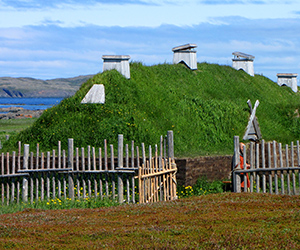
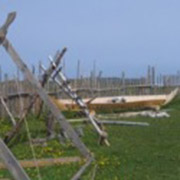
The sagas, particularly the Saga of the Greenlanders and the Saga of Erik the Red, provide a detailed account of the Viking exploration of a land they called Vinland. These narratives describe how Leif Erikson, following in the footsteps of earlier explorers like Bjarni Herjólfsson, sailed westward from Greenland and discovered a bountiful land rich with resources. The sagas recount encounters with the Indigenous peoples, whom the Vikings called Skrælings, and tell of temporary settlements, including the most famous one believed to be at L’Anse aux Meadows in present-day Newfoundland.
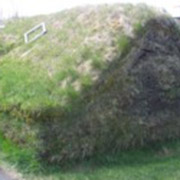
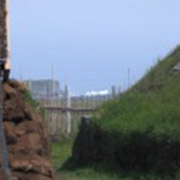
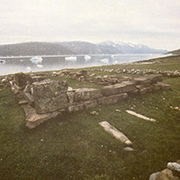
The importance of these sagas lies in their role as some of the earliest records of European exploration of the Americas. For centuries, the sagas were dismissed by many scholars as myth or exaggeration. However, with the discovery of the Viking settlement at L’Anse aux Meadows in the 1960s, the credibility of the Vinland sagas was greatly enhanced. Archaeological evidence from the site, including the remains of Norse-style buildings, tools, and iron smelting, confirmed that the Vikings had indeed reached North America around the time described in the sagas. This discovery provided tangible proof that the sagas were not simply flights of fancy but were grounded in real historical events.
The Vinland sagas have thus become a crucial source for understanding the early history of European exploration in Canada. They offer a rare window into the mindset and motivations of the Norse explorers, who were driven by the search for new lands, resources, and opportunities. The description of Vinland as a land of "wild grapes" and abundant resources reflects the Vikings’ awe at the potential of the new land they had discovered, and it underscores the significance of their journey in the broader context of European exploration.
However, while the Vinland sagas are generally accepted as containing kernels of historical truth, historians must approach them with caution. The sagas were passed down orally for generations before being written down, likely in the 13th century—centuries after the events they describe. This gap between the events and the recording of the sagas means that some details may have been embellished, altered, or lost over time. The sagas also contain elements of mythology and heroism that reflect the cultural values of the Viking age rather than objective historical reporting. For example, the interactions between the Vikings and Indigenous peoples are often depicted in simplified or one-dimensional ways, and it is likely that the reality of these encounters was far more complex.
Another factor to consider is that the sagas were written for an audience in medieval Iceland, where storytelling was a key form of cultural expression. The authors of the sagas likely aimed to entertain as much as to inform, and they may have adjusted the narratives to suit the expectations and values of their audience. This does not diminish the historical value of the sagas, but it does mean that historians must carefully sift through the layers of myth and legend to extract the underlying historical facts.
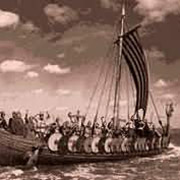
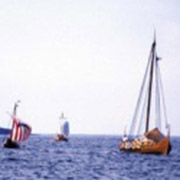
The credibility of the Vinland sagas is further supported by the consistency of their descriptions with archaeological and geographical evidence. The descriptions of Vinland, with its fertile land, timber, and abundant wildlife, match the characteristics of Newfoundland and the surrounding areas. The sagas' accounts of the long sea voyages, the use of ships, and the specific methods of navigation used by the Vikings align with what historians know about Viking maritime technology and exploration techniques. The settlement at L’Anse aux Meadows fits with the sagas' descriptions of a temporary Viking encampment, used as a base for exploring further into the continent.
In terms of Canadian history, the Vinland sagas are essential because they represent the earliest documented European presence in North America. Long before Columbus or the later French and British explorers, the Vikings had established a foothold on the continent. This challenges the traditional narrative of European discovery and colonization, placing Canada at the forefront of early European exploration. The sagas remind us that the history of European contact with North America did not begin in 1492 but nearly 500 years earlier, with the voyages of the Norsemen.
Furthermore, the Vinland sagas highlight the interconnectedness of early exploration in the North Atlantic. The Vikings’ voyages to North America were part of a broader pattern of Norse expansion that included the settlement of Iceland and Greenland. These interconnected voyages demonstrate that the Vikings were not isolated raiders or wanderers but skilled navigators and explorers who sought to push the boundaries of the known world. Their encounters with the Indigenous peoples of North America, though limited and fleeting, mark the first documented interaction between Europeans and the Indigenous inhabitants of the continent—a theme that would become central to the history of European colonization in Canada.
In conclusion, the Vinland sagas are invaluable for understanding the early history of European exploration in North America and, more specifically, Canada. They offer a glimpse into the world of the Vikings, their motivations for exploration, and their interactions with the Indigenous peoples they encountered. While the sagas must be approached with a critical eye, their historical credibility has been greatly enhanced by the discovery of L’Anse aux Meadows. The sagas, combined with archaeological evidence, form a compelling narrative of Viking exploration that underscores Canada’s unique place in the history of European expansion into the Americas. Through these sagas, we can trace the earliest chapter of European presence on the continent, one that foreshadows the more extensive exploration and colonization efforts that would follow in the centuries to come.




Cite Article : www.canadahistory.com/sections/documents