CANADA HISTORY

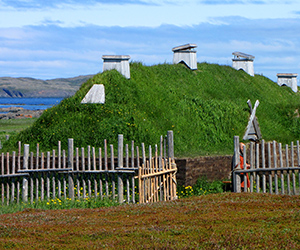
The Viking colonization of North America, particularly at L'Anse aux Meadows in Newfoundland, is a fascinating chapter in early exploration history. The Vikings, known for their extraordinary seafaring abilities and their bold voyages across the North Atlantic, were the first Europeans to reach the New World, nearly 500 years before Columbus. Their settlement at L'Anse aux Meadows, discovered in the 1960s, provides archaeological evidence of their presence in North America around the year 1000 AD. Despite the rich resources available—fertile land, timber, fish, and other natural wealth—the Viking outposts in the Americas were short-lived. The reasons for their failure to establish a permanent foothold in North America can be attributed to three main factors: the harsh weather, hostile relations with Indigenous peoples, and the lack of sustained support from Europe. These combined challenges doomed the Viking attempts to settle in the Americas to long-term failure, preventing them from capitalizing on the opportunities the land offered.
Weather: A Harsh and Unforgiving Environment
The Viking settlers faced a daunting natural environment in North America, which was significantly harsher than the lands they had previously explored and colonized in Greenland and Iceland. While the Viking sagas speak of Vinland as a land of plenty—rich with timber, wildlife, and fertile soil—the reality was far more challenging. Newfoundland's northern climate is marked by cold, harsh winters, short growing seasons, and frequent storms. The Vikings, used to the difficult conditions of Greenland and Iceland, were no strangers to tough environments, but the cold and unpredictable weather on the Newfoundland coast posed serious challenges to maintaining a stable settlement.
Winter temperatures could plunge below freezing for extended periods, making it difficult to grow crops and sustain livestock. The limited growing season would have placed pressure on food supplies, forcing the settlers to rely on fishing, hunting, and gathering. Even with the abundant fish stocks, like cod, in the surrounding waters, the unforgiving winters and a lack of established agricultural systems made long-term survival difficult. The isolation of the settlement would have compounded these challenges, as resupplying from Greenland or Iceland was both dangerous and infrequent due to the stormy seas and icebergs that dominated the North Atlantic.
The harsh weather conditions, while not the only factor, certainly contributed to the short-lived nature of Viking settlements in North America. Without a more temperate climate and reliable agricultural base, the Vikings found it challenging to sustain a lasting presence in Newfoundland.
Indigenous Peoples: Hostile Relations and Limited Trade
The Vikings’ interactions with the Indigenous peoples of North America—likely the ancestors of the Beothuk in Newfoundland and other groups along the Atlantic coast—presented another major obstacle to the survival of their settlements. The sagas recount several encounters between the Norse settlers and the Indigenous peoples they called Skrælings. These encounters were often tense and hostile, and the Vikings quickly realized they were vastly outnumbered.
The Indigenous groups of North America had lived on the continent for thousands of years, possessing a deep knowledge of the land and its resources. While the Vikings arrived with advanced seafaring skills, weapons, and metalworking, they lacked the ability to live off the land in the same way the Indigenous peoples did. Initial contact between the two groups may have been marked by curiosity and limited trade, but it did not take long for tensions to escalate into violence.
The Vikings' small numbers—only around 100 settlers are believed to have lived at L'Anse aux Meadows at its height—made it difficult to defend themselves against the larger Indigenous populations. The sagas describe clashes between the Norse and Indigenous groups, often over resources, with the Vikings coming under attack and suffering casualties. In one such incident, described in the Saga of the Greenlanders, a Viking explorer named Thorvald Eriksson was killed by an arrow after a skirmish with the Indigenous peoples.
The inability to forge lasting alliances or establish peaceful relations with the Indigenous peoples severely limited the Vikings' ability to settle and expand in North America. Unlike later European colonizers, who would arrive with greater numbers and resources, the Vikings were simply too few to hold their ground in a hostile environment. The continuous threat of conflict, combined with the challenges posed by the land itself, contributed to their decision to abandon their settlements.
Lack of Support from Europe: Isolation and Supply Challenges
Perhaps the most critical factor in the failure of the Viking settlements in North America was the lack of sustained support from Europe. Unlike the later European powers, which would build vast colonial empires supported by trade networks and military forces, the Vikings lacked the infrastructure and resources needed to maintain long-distance colonies. Their voyages to North America were pioneering, but they were not backed by the kind of economic and political support that would have been necessary for long-term success.
The Norse settlements in Greenland and Iceland were already on the fringes of the Viking world, and the voyage to North America was even more perilous. Resupply missions from Greenland or Iceland would have been rare and dangerous, given the treacherous waters of the North Atlantic. Without regular contact and resupply from Europe, the Viking settlers in North America would have been largely on their own, relying on the resources of the land and their ability to navigate hostile territory.
The relative isolation of the Norse world by the early 11th century also played a role in the lack of follow-up expeditions to North America. By this time, the Viking age of expansion was beginning to wane. The political and economic centers of the Norse world were shifting away from exploration and conquest toward consolidation and trade with mainland Europe. The brief window of Viking expansion into the North Atlantic—marked by the settlement of Iceland and Greenland—was closing, and with it, the ambition to push further westward.
Furthermore, the Norse world itself was changing. By the time the Vinland voyages took place, Christianity was spreading throughout Scandinavia, and the Viking culture that had driven earlier expansion was beginning to transform. The focus of Norse society was turning inward, with increased ties to the rest of Europe and less emphasis on long-distance exploration. As a result, the settlements in North America were not reinforced with additional settlers or resources, and they were ultimately abandoned.
Conclusion: The Viking Legacy in North America
The failure of the Viking settlements in North America can be attributed to a combination of factors: the harsh climate, hostile relations with Indigenous peoples, and the lack of sustained support from Europe. While the land itself was rich in resources—timber, fish, game, and fertile soil—the challenges the Vikings faced were too great for them to establish a lasting foothold. The settlement at L'Anse aux Meadows, though short-lived, remains a testament to the courage and ambition of the Vikings, whose voyages across the North Atlantic predated the later age of European exploration by centuries.
The importance of the Viking settlements in Canadian history cannot be overstated. They represent the first known European contact with the Americas, centuries before Columbus and other explorers. The archaeological evidence at L'Anse aux Meadows provides tangible proof of this early chapter in Canadian history, offering a glimpse into the lives of the Norse explorers and the challenges they faced in a new and hostile land.
Though the Viking presence in North America was brief, their voyages are a reminder of the vast scope of human exploration and the interconnectedness of the world, even in the distant past. The story of the Vikings in Canada continues to inspire curiosity and admiration, shedding light on a fascinating period of history when Europeans first set foot on the North American continent.
Cite Article : www.canadahistory.com/sections/documents