CANADA HISTORY

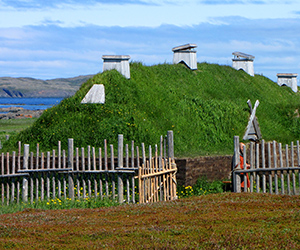
The late 1400s was a time of expanding horizons for Europe, with legends and stories circulating about the existence of rich lands across the Atlantic Ocean. These tales, which originated with the Norse sagas of the Vikings, spoke of distant shores where resources were plentiful and new opportunities awaited. For centuries, the Vikings had established colonies in Greenland and, according to their own accounts, had reached the shores of North America, particularly a land they called Vinland, believed to be in present-day Newfoundland. Though their North American settlements were short-lived, the memory of their exploits lingered in the oral traditions of Northwestern Europe.
Among those who heard these tales were English and French fishermen, who ventured across the North Atlantic in search of fertile fishing grounds. Their journeys led to the discovery of the Grand Banks of Newfoundland, one of the richest fishing areas in the world. The Grand Banks’ abundant cod stocks, which could be harvested in large quantities, were a treasure trove for European markets. However, this discovery was not widely publicized. The fishermen, recognizing the immense value of their find, were keen to keep the location secret, ensuring their exclusive access to these waters and avoiding competition from rival nations.
These early and largely undocumented voyages across the Atlantic laid the groundwork for what would become a transformative era of exploration and expansion. As news of Christopher Columbus’s 1492 discovery of the Caribbean began to spread across Europe, it rekindled interest in the possibility of sailing west to reach the lucrative markets of the Far East. This desire to find a westward route to China, India, and the Spice Islands, which had been central to Columbus’s initial ambitions, took hold in England as well.
By 1497, England's monarch, Henry VII, had secured his power following the conclusion of the Wars of the Roses, a period of civil strife that had left England politically fragmented. With his position secure, Henry VII turned his attention outward, seeking to expand England’s influence and wealth through overseas exploration. The king recognized the potential value of discovering new lands or, more critically, finding a direct trade route to Asia. He commissioned the Genoese navigator John Cabot (Giovanni Caboto) to undertake an expedition across the Atlantic in the hopes of replicating or surpassing Columbus’s success.
On May 2, 1497, Cabot set sail from Bristol, England, aboard a small ship named the Matthew. His voyage was backed not only by the English crown but also by merchants from Bristol, who saw the potential for immense profit in the discovery of new trade routes. After weeks at sea, Cabot and his crew sighted land, which is believed to have been the coast of Newfoundland, although some accounts suggest he may have also reached parts of Labrador and Cape Breton Island. In contrast to Columbus, who explored the tropical islands of the Caribbean, Cabot’s landfall was in the colder, more northern reaches of the New World.
Cabot’s voyage, though brief, was highly significant. He spent only a few hours ashore but planted a flag to claim the land in the name of Henry VII and England, marking the first formal European claim to what would become Canada. Cabot’s belief that he had reached the outskirts of Asia mirrored Columbus’s mistaken assumption, and like Columbus, Cabot reported that the natives he encountered—or thought he had seen—were likely Asian. Although Cabot’s interactions with Indigenous peoples were limited, his claim to the land was enough to establish England’s presence in the New World, laying the foundation for future British expansion into North America.
More importantly, Cabot’s voyage provided a critical spark for the burgeoning fishing industry that would shape the future of Newfoundland and the wider North Atlantic region. His reports of seas teeming with fish—so abundant that baskets could be lowered into the water and pulled out full of cod—triggered a rush of European fishermen. By the early 1500s, fleets of fishing vessels from England, France, Spain, and Portugal were making regular voyages to Newfoundland, establishing seasonal fishing camps and beginning the process of integrating this resource-rich region into Europe’s economic sphere.
Cabot’s discovery of Newfoundland’s rich fishing grounds was one of the earliest instances of European economic exploitation in North America. The fishing industry that developed around the Grand Banks would become one of the most important drivers of European interest in the region for centuries. Cod, dried and salted, became a staple of the European diet, and the Grand Banks played a crucial role in sustaining the economies of coastal communities in England and France. This early economic activity also paved the way for later colonization efforts, as European powers sought to secure and expand their control over these lucrative resources.
Cabot’s 1497 voyage was followed by a second expedition in 1498, which set out with the aim of further exploring the lands he had discovered and perhaps finding the long-sought passage to Asia. Unfortunately, this second voyage ended in tragedy. Cabot and his fleet were lost at sea, their fate unknown. Despite the mystery surrounding his final expedition, Cabot’s contributions to the exploration of North America were profound. His voyages not only established England’s claim to parts of what is now Canada but also opened the floodgates for other European explorers and fishermen eager to exploit the resources of the New World.
The importance of Cabot’s expeditions in the context of Canadian history is far-reaching. His discovery of Newfoundland’s rich fishing grounds ensured that the region would remain an area of European interest long before formal colonization efforts began. The seasonal fishing stations established by Europeans during the 1500s laid the groundwork for permanent settlements that would follow in the 17th century. Moreover, Cabot’s voyages were the starting point for England’s long and complex relationship with North America, which would eventually lead to the establishment of colonies throughout the continent and the creation of the British Empire in the New World.
Cabot’s exploration also highlights the early European misconceptions about the geography of the New World. His belief that he had reached the outer fringes of Asia was a reflection of the limited knowledge of the time, and his misidentification of the Indigenous peoples as Asians underscores the initial confusion surrounding the discovery of the Americas. Nevertheless, Cabot’s expeditions, like those of Columbus and other explorers, were instrumental in broadening European awareness of the existence of new lands and peoples, even if the true nature of these discoveries would only be fully understood much later.
In conclusion, John Cabot’s 1497 voyage to Newfoundland marked a critical moment in the history of Canadian exploration. His journey not only established England’s claim to parts of North America but also opened the door to European economic exploitation of the region’s rich natural resources. The fishing industry that developed as a result of Cabot’s discovery played a central role in shaping the early history of Newfoundland and set the stage for later colonization efforts. Cabot’s legacy as one of the first Europeans to reach the shores of what would become Canada is an enduring reminder of the early stages of European expansion into the New World and the profound impact it would have on the development of Canadian history.
Cite Article : www.canadahistory.com/sections/documents