CANADA HISTORY
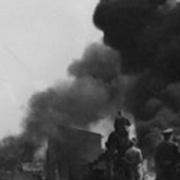
The Fall of Poland in October 1939 marked the first significant victory of Nazi Germany in World War II. Within a matter of weeks, Poland had been overrun by the Wehrmacht's new Blitzkrieg tactics, which combined speed, surprise, and overwhelming force to crush the enemy before they could mount an effective defense. By October 6th, Poland had surrendered, and Germany turned its attention westward. Hitler's ambitions now extended to the conquest of France and the neutralization of Britain, the remaining obstacles to his domination of Europe. What followed was a period of military inactivity in the west, known as the "Phony War," during which both sides prepared for what everyone knew would be a brutal confrontation.
The "Phony War": Preparation and Hesitation
The period from October 1939 to May 1940 became known as the Phony War because, despite the declarations of war by Britain and France following Germany’s invasion of Poland, there was little fighting on the Western Front. While the Allies had mobilized their forces, they were reluctant to launch major offensives, mindful of the devastating casualties of World War I and apprehensive about rushing into full-scale conflict.
For Canada, a country bound to Britain by both loyalty and law, the situation was no less urgent. Canada declared war on Germany on September 10, 1939, just days after Britain did, marking its first independent declaration of war. Prime Minister Mackenzie King understood the need to support Britain but was deeply concerned about the possibility of conscription, a divisive issue in Canadian history. Memories of the Conscription Crisis of World War I, which had fractured the nation, especially in Quebec, loomed large. Nevertheless, Canada was committed to the war effort, and the first Canadian troops sailed for Britain in December 1939.
The British and French forces, however, made little effort to engage Germany, hoping to avoid another bloody stalemate like the one seen in the trenches of World War I. For their part, the Germans used the Phony War to review the successes of their Blitzkrieg tactics in Poland and refine their strategies for the western campaign. Heinz Guderian, the chief architect of Germany’s armored warfare doctrine, advocated for a plan that would focus on a surprise thrust through the Ardennes region of France, bypassing the heavily fortified Maginot Line and catching the Allies off guard. This plan would prove devastatingly effective in the coming months.
The German Blitzkrieg and the Invasion of France
On May 10, 1940, the long-awaited German offensive in the West began. The Germans launched simultaneous attacks on Holland, Belgium, and Luxembourg to lure the Allies into the Low Countries, just as Guderian had predicted. The British and French forces responded as planned, advancing into Belgium to form a defensive line. However, this was exactly what the Germans had intended. As the Allied armies pushed into Belgium, German armored divisions under Guderian and Erwin Rommel executed a lightning-fast breakthrough to the south, smashing through the French defenses at Sedan and racing toward the English Channel.
The German offensive was a masterstroke of deception and speed, cutting off the British Expeditionary Force (BEF) and a significant portion of the French Army from the rest of France. The encircled Allies had no choice but to retreat to the coastal town of Dunkirk, where a desperate evacuation operation—Operation Dynamo—was launched. Between May 26 and June 4, more than 330,000 British, French, and Belgian soldiers were evacuated from Dunkirk in a heroic effort that saved the bulk of the BEF but left much of their heavy equipment behind.
Canada's Role in the Early Days of the War
As the situation in France deteriorated rapidly, the 1st Canadian Division, which had been training in Britain, became a part of the Allied calculations. The Canadians, eager to prove themselves and support Britain, were initially slated to be sent to France to help bolster the faltering defenses. On May 24, 1940, the 1st Canadian Brigade was ordered to Dover in preparation for deployment to France. However, as the German advance made the situation increasingly dire, the plan was reconsidered, and the Canadians did not sail.
The fall of Dunkirk forced a further re-evaluation of Allied strategy. Despite the disastrous situation, the Allies still hoped to mount a defense of France. A second expeditionary force, including Canadian troops, was planned to join the remaining French forces and resist the next phase of the German attack. On June 12-13, 1940, the 1st Canadian Division arrived in Brest, France, ready to fight.
However, the rapid collapse of French resistance forced British Commander Sir Alan Brooke to reverse the Canadian deployment. Recognizing that the Allied cause in France was lost, Brooke ordered the Canadians to return to Brest for evacuation. The Canadian 1st Brigade was able to escape with some of their heavy guns and Bren Gun carriers but left behind much of their equipment. By June 17, the Canadian troops had returned to Britain, marking the end of their brief involvement in the Battle of France.
The Battle of Britain and Canada's Role as a Key Ally
With the fall of France, Britain now stood alone against the might of Nazi Germany. Hitler had hoped that the rapid conquest of France would force Britain to negotiate for peace, but Prime Minister Winston Churchill famously declared that Britain would never surrender. What followed was one of the most critical battles of World War II: the Battle of Britain.
Canada, as Britain’s most reliable ally, played a crucial role in this period. The 1st Canadian Division, now fully equipped and battle-hardened, was stationed in Britain as part of the mobile reserve, positioned south of the Thames River in case of a German invasion. For a time, these Canadian troops, alongside British forces, were the only line of defense between Britain and a German occupation.
Beyond the army, Canada’s contributions to the air war were equally vital. The Royal Canadian Air Force (RCAF) played a significant role in the Battle of Britain, providing pilots and aircraft to help defend Britain from the Luftwaffe’s aerial assault. Canadian pilots fought with distinction, and the RCAF would go on to be a crucial component of the Allied air campaign throughout the war.
The Strategic Importance of Canada in the War Effort
Canada’s role during this critical juncture in the war cannot be overstated. With Britain’s future hanging in the balance, Canada became its most dependable supplier of military and logistical support. The British Commonwealth Air Training Plan, one of Canada’s most significant wartime contributions, trained thousands of pilots from across the Commonwealth, including Britain, Australia, New Zealand, and other nations, in Canadian skies. This program became known as the "Aerodrome of Democracy" and was vital to ensuring the Allies had a steady stream of trained airmen to fight the Luftwaffe.
On the home front, Canada’s economy quickly shifted to a war footing. Factories that had once produced consumer goods were retooled to manufacture aircraft, tanks, guns, and ammunition. Canadian shipyards built hundreds of ships for the Royal Navy and Royal Canadian Navy (RCN), while Canadian farms supplied much of the food that kept Britain fed during the darkest days of the war.
The Turning Point: Canada's Lasting Legacy in the War
The Battle of Britain and the subsequent year of preparation before the D-Day invasion solidified Canada’s role as a crucial partner in the Allied war effort. With Canadian soldiers ready to defend Britain, Canadian pilots defending the skies, and Canadian industry supplying vital resources, Canada proved itself an indispensable part of the global fight against fascism.
As Britain prepared for the coming struggle, Canada remained its steadfast ally, demonstrating its loyalty and commitment to the defense of democracy. Canadian forces would go on to participate in the invasions of Sicily, Italy, and Normandy, earning a reputation as elite and determined soldiers.
Canada’s transformation during these early years of the war—from a primarily agrarian nation to a modern industrial powerhouse—would leave a lasting impact on its economy and society. The war effort accelerated Canada’s urbanization, industrialization, and political independence, propelling it onto the world stage as a middle power.
Conclusion: The Phony War, Dunkirk, and Canada's Role in the War
The early days of World War II, from the fall of Poland to the collapse of France and the Battle of Britain, were a pivotal time for both Canada and the world. The rapid German advances shocked the Allies, forcing them to adapt quickly to an unprecedented form of warfare. Canada, despite its initial hesitation, rose to the occasion, becoming Britain’s most important ally during its darkest hour.
As the war progressed, Canada’s contributions on land, sea, and air would only grow. The story of the 1st Canadian Division, poised to fight in France and later stationed to defend Britain, is just one chapter in a broader narrative of Canadian resolve, determination, and sacrifice. Canada's early war efforts not only demonstrated its commitment to the Allied cause but also marked a significant step in its emergence as a modern, independent nation capable of shaping the course of global history.
Cite Article : www.canadahistory.com/sections/documents