CANADA HISTORY
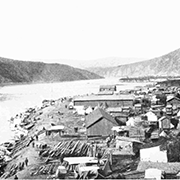
The Yukon Gold Rush, often referred to as the Klondike Gold Rush, represents one of the most significant events in Canadian history. This transformative moment took place in the late 19th century and helped to bring the remote and rugged Yukon territory into the spotlight, fueling economic growth and cementing Canada's frontier identity. The Yukon, which had previously been one of the least accessible and sparsely populated areas of Canada, became the site of a fevered rush for wealth, attracting tens of thousands of fortune seekers from around the world. The Yukon Gold Rush not only reshaped the territory but also had a profound impact on the Canadian economy, national identity, and government policy.
The Last Frontier: The Unexplored Yukon
Before the gold rush, the Yukon was a remote and largely uninhabited wilderness. As part of the Northwest Territories, the Yukon region was known for its rugged terrain, towering mountains, and harsh climate, with Mount Logan, Canada's highest peak, dominating the landscape. The Rockies and Coast Mountains created natural barriers that limited access, while the harsh winters, characterized by freezing temperatures and snow-covered landscapes, made survival difficult for anyone without expert knowledge of the land.
The indigenous First Nations peoples, including the Tagish and Tlingit, had lived in the Yukon for centuries, surviving off the land through hunting, fishing, and trading. However, the indigenous population in the region was relatively small due to the challenging environment, and few Europeans had ventured far into the Yukon. The Hudson’s Bay Company (HBC) had established a few posts in the northern regions of the Northwest Territories, but even these were limited to the most accessible river routes. The Yukon's economic potential remained largely untapped until gold was discovered in the late 19th century.
Early Prospectors and the 1896 Discovery
The first prospectors arrived in the Yukon following the Cariboo Gold Rush and Fraser River Gold Rush in British Columbia during the 1850s and 1860s. Many of these miners traveled north as the southern gold fields were depleted. They hoped to strike it rich in the vast untamed regions of Alaska and the Yukon. By the late 1880s, only a few hundred American and Canadian prospectors were scattered across the Yukon, with many centered around Forty Mile Creek on the Yukon River. The Mounties began to establish a presence at Forty Mile in 1894 to assert Canadian sovereignty over the region and manage the growing influx of miners, but it was still a sparsely populated wilderness.
The turning point came in August 1896, when a prospector named George Carmack and his two Tagish companions, Skookum Jim Mason and Dawson Charlie, discovered gold on a tributary of the Klondike River. This discovery was made at Rabbit Creek (later renamed Bonanza Creek) and set off what would become one of the greatest gold rushes in history. The news of gold in the Yukon did not immediately spread, as the miners focused on staking claims and working through the long, cold winter of 1896-1897. However, when the ice broke on the Yukon River in the spring of 1897, the rush to spread the word and cash in on the Klondike’s riches began.
The Gold Rush Fever: The Yukon Becomes the Center of the World
The first news of the Klondike gold strike reached the outside world on July 17, 1897, when the Portland arrived in Seattle carrying 68 miners and a ton of gold, worth approximately $2 million. Just three days earlier, another ship, the Excelsior, had landed in San Francisco with 15 miners carrying half a million dollars’ worth of gold. These astonishing sums, combined with sensationalized reports in newspapers across North America, fueled a global gold rush fever. Tens of thousands of people set out for the Yukon, dreaming of striking it rich.
The Klondike Gold Rush occurred against the backdrop of an economic recession that had gripped North America for several years. Many were eager for an opportunity to escape the bleak economic conditions of the time, and the lure of gold in the Klondike offered the hope of financial salvation. The rush was not limited to Canadians and Americans—adventurers from Europe, Australia, and Asia made their way to the Yukon, making Canada a focal point for the world’s attention.
The rushers, as they were called, faced a harrowing journey to the Yukon. Most took the Chilkoot Trail or White Pass from Skagway, Alaska, through the treacherous mountain passes. These routes were grueling, requiring prospectors to haul tons of supplies over steep, icy terrain in the dead of winter. Many did not survive the journey, falling victim to accidents, exhaustion, or illness. Those who made it through the passes still had to build boats and float down the Yukon River to reach Dawson City, the new boomtown that had sprung up near Bonanza Creek.
Dawson City and the Canadian Presence
As gold seekers flooded into the region, Dawson City quickly grew into a bustling, if chaotic, metropolis. At its height, Dawson was the largest city in Western Canada, with a population of around 30,000 people. The influx of miners brought business, services, and entertainment to the remote wilderness. Hotels, saloons, and general stores thrived, while lawlessness and vice also proliferated. The Mounties, under the command of Sam Steele, were instrumental in maintaining law and order in Dawson. Steele, who became a legendary figure during the Klondike Gold Rush, ensured that the rule of law prevailed in Dawson, earning the respect of both miners and Canadian officials.
The North-West Mounted Police (NWMP) played a critical role in ensuring Canadian sovereignty in the Yukon during this time. As the vast majority of prospectors were American, there were real concerns that the Yukon could become lawless or even fall under U.S. control. However, the Mounties maintained a strict presence, enforcing Canadian law and collecting customs duties on goods entering the territory. This helped solidify the Yukon's place within Canada and ensured that the wealth generated by the gold rush would benefit the nation.
Economic and National Impact
The Klondike Gold Rush brought enormous wealth and attention to Canada. Although the gold rush itself lasted only a few short years, the influx of people and capital revitalized the Canadian economy, which had been languishing in the late 1890s. The flood of miners, entrepreneurs, and businesses that arrived in the Yukon provided a much-needed economic stimulus, creating new markets for goods and services. Towns such as Dawson City became centers of commerce, while transportation routes into the north were developed and expanded to accommodate the flow of people and supplies.
The Yukon’s gold rush also had far-reaching implications for Canadian politics. The increased wealth and population growth in Western Canada contributed to the development and settlement of the Prairies, reinforcing Prime Minister Wilfrid Laurier’s vision of the West as Canada’s future. The rush helped open up the Northwest and Northern British Columbia, establishing these regions as integral parts of the nation. Laurier’s second term in office was largely buoyed by the prosperity that came with the gold rush, as well as by his successful management of Canada's growth and the opening of the West.
Additionally, the gold rush showcased Canada’s growing national sovereignty and self-governance. The strong presence of the NWMP, the enforcement of Canadian law, and the management of the influx of foreign nationals all underscored Canada’s capacity to govern its own affairs, even in remote and challenging environments. The Klondike Gold Rush was a critical moment in Canada’s assertion of its place on the world stage, helping to demonstrate that the country was not just a colonial outpost of the British Empire but an emerging nation with its own ambitions and identity.
A Defining Event in Canadian History
The Klondike Gold Rush was more than just a mad scramble for wealth—it was a defining event in Canada’s history, shaping the economic, social, and political landscape of the country. It brought global attention to Canada, attracting people from all corners of the world, while also fueling the country's economic recovery from a prolonged recession. The rush contributed to the opening and development of the Yukon and the Northwest, reinforcing the notion that Canada was a vast and resource-rich nation with endless opportunities for growth.
The gold rush also helped foster a sense of national pride and identity, particularly through the role of the NWMP and the assertion of Canadian sovereignty in the face of an overwhelming influx of American miners. The success of the Mounties in maintaining law and order in Dawson City became a source of pride for Canadians, while the prosperity that flowed from the gold rush helped solidify Laurier’s government and its vision for a united and prosperous Canada.
Ultimately, the Klondike Gold Rush marked the beginning of Canada’s modern frontier expansion, setting the stage for further economic development and establishing the Yukon as a key part of the Canadian fabric.
Cite Article : www.canadahistory.com/sections/documents