CANADA HISTORY
The age of the railway in Canada, particularly during the late 19th and early 20th centuries, was a period of unparalleled growth, expansion, and national development. The Canadian Pacific Railway (CPR), completed in 1885, symbolized the nation’s determination to unify its disparate regions and fuel economic prosperity through modern infrastructure. It laid the foundation for Canada's rapid economic growth by linking the resource-rich West with the industrialized East. Railways were not merely transportation networks; they were vital engines of immigration, commerce, and settlement. As spur lines spread across the landscape, they brought prosperity to isolated regions and opened up vast new tracts of land for agriculture, resource extraction, and development.
The Success of the Canadian Pacific Railway
The CPR was an early triumph in Canadian history, contributing immensely to the economic and social transformation of the country. The completion of the railway linked the Maritimes, Ontario, Quebec, and the Prairies to British Columbia, fulfilling the promises made during Confederation to unite the nation coast to coast. The railway facilitated the movement of immigrants, primarily from Eastern Canada, the United States, Britain, and Europe, who flocked to the fertile prairies of Manitoba, Saskatchewan, and Alberta. As new settlers arrived and established farms, towns, and cities, the railway became the lifeline that transported agricultural goods to market, bringing a wave of prosperity that rippled throughout the country.
The economic boom created by the CPR continued well into the 1890s and early 1900s, as the post-recession recovery attracted significant investment and created jobs. Railroads were seen as the key to unlocking Canada’s potential, transforming it into a major player on the global stage. The Laurier government, riding the waves of economic optimism, recognized the railway's role in building the nation and capitalizing on the momentum it had created.
The Grand Trunk Pacific: A Second National Railway
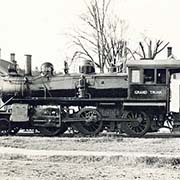
By the early 20th century, Canada’s growing population and the ongoing development of the West prompted calls for the creation of a second national railway. The Grand Trunk Railway (GTR), one of the country’s most prominent rail companies, approached Prime Minister Wilfrid Laurier with a bold proposal: the construction of a second transcontinental railway line to complement the CPR and open up northern regions for settlement and development. Laurier was eager to support the expansion of Canada’s rail network, viewing the project as not only an economic boon but also a political opportunity to garner votes in the upcoming election.
Laurier’s vision was ambitious. The Grand Trunk Pacific Railway (GTP) was planned to stretch from Moncton, New Brunswick, to Prince Rupert, British Columbia, following a more northern route across the Prairies. This new line would open up northern Ontario, Manitoba, and Saskatchewan, facilitating further settlement and agricultural development. The GTP’s western section would be built by the Grand Trunk, with government backing through bonds, while the Canadian government would construct the eastern portion, leasing it to the GTR for 50 years at minimal cost.
Laurier used the railway project as a centerpiece of his 1904 election campaign, promoting it as a national project that would re-ignite the excitement and growth spurred by the CPR two decades earlier. The public supported the expansion enthusiastically, and Laurier secured a resounding victory, winning 139 seats to the Conservatives' 55. Construction began shortly after.
The Grand Trunk Pacific's Challenges and Financial Collapse
As with many large infrastructure projects, the Grand Trunk Pacific Railway faced significant financial and logistical challenges. The initial estimates for the western section of the railway were around $60 million, but by the time the line was completed, costs had skyrocketed to $160 million. The eastern section, built by the government, also faced massive cost overruns, ballooning from an expected $85 million to $140 million. Despite these difficulties, the railway reached Prince Rupert in 1914, connecting the mining, forestry, and fishing riches of northern British Columbia to global markets.
Like the CPR, the GTP spurred economic activity along its route, as settlers flocked to the newly opened lands, and new businesses, hotels, and industries emerged to support the burgeoning towns and cities. However, the Grand Trunk miscalculated its ability to manage the new railway profitably. By 1915, the company’s leadership gambled on a better deal by refusing to renew its lease for the eastern section of the railway, hoping to gain more favorable terms. This strategy backfired, plunging the Grand Trunk into bankruptcy.
The Canadian Northern Railway and Government Takeover
The Canadian Northern Railway (CNR) was another ambitious railway project that began as a modest short line in Manitoba in 1896. Under the leadership of William Mackenzie and Donald Mann, the railway grew into a transcontinental empire, backed by generous government subsidies and bonds. The CNR followed the Yellowhead route from Edmonton to Vancouver, with additional lines branching into the northern prairies and beyond. Like the GTP and the CPR before it, the Canadian Northern Railway helped settle new lands and brought the wealth of the West—including wheat, timber, and minerals—into global markets.
However, the outbreak of World War I in 1914 marked the beginning of the end for Canada’s railway boom. The war strained global trade, reduced passenger numbers, and caused significant financial hardship for all three transcontinental railways. By the early 1920s, both the Grand Trunk Pacific and Canadian Northern Railway were bankrupt, victims of overexpansion, mismanagement, and the collapse of global commerce. In the aftermath, the Canadian government stepped in, nationalizing both companies and merging them into a new entity: the Canadian National Railway (CNR).
The creation of Canadian National Railway in 1919 represented a significant turning point in Canadian economic history. While the golden age of railways had come to an end, the nationalization of the country's railway system preserved a critical component of Canada's transportation infrastructure. The CNR continued to operate as a government-run organization, supporting the movement of freight and passengers across the country and ensuring that Canada’s vast geographic expanse remained connected.
The Lasting Legacy of Canada's Railway Era
Although World War I and the financial troubles of the Grand Trunk Pacific and Canadian Northern Railway marked the end of Canada’s railway boom, the importance of railways to Canadian history cannot be overstated. Railways transformed the nation, knitting together its disparate regions, fostering economic growth, and establishing Canada as a global player in trade and agriculture. Railways made it possible for immigrants to settle vast new regions, driving the expansion of cities and towns in the West and across northern Ontario.
Beyond their economic impact, the railways played a crucial role in shaping Canadian national identity. The construction of the CPR, GTP, and CNR was not only a feat of engineering but also a symbol of nation-building. The Grand Trunk Pacific and Canadian Northern railways, despite their financial difficulties, contributed to Canada’s westward expansion and the development of its natural resources.
In the modern era, railways remain a vital part of Canada’s transportation network, particularly in the freight industry. Canadian National and Canadian Pacific Railway continue to play an important role in moving goods across the continent, linking Canada’s economy to global markets. However, the age of the railway also left an enduring legacy of government involvement in key industries, as the nationalization of the railways became a blueprint for future state intervention in other sectors during times of economic crisis.
The age of railways was central to the development of Canada’s economy, society, and identity, forging connections that would help the young nation grow into the vast and prosperous country it is today. The expansion of rail networks, though fraught with challenges and financial difficulties, facilitated the movement of people, goods, and ideas, playing an indispensable role in Canada's nation-building project.
Cite Article : www.canadahistory.com/sections/documents