CANADA HISTORY
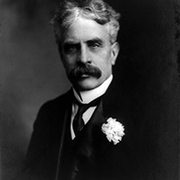
The year 1911 marked a significant turning point in Canadian history, a moment when domestic politics, international affairs, and the evolving Canadian identity converged to reshape the nation's trajectory. The long reign of Sir Wilfrid Laurier, one of Canada's most influential and enduring Prime Ministers, came to an unexpected end, signaling the arrival of a new era under Robert Borden. This year saw the rise of issues that would define Canada’s path forward: the creation of a Canadian Navy, debates over reciprocity with the United States, and the growing assertion of Canada's place within the British Empire. These themes not only shaped the outcome of the 1911 election but also set the stage for the challenges Canada would face in the years leading up to the First World War. The election of 1911, often overshadowed by the looming conflict of 1914, nonetheless remains a watershed year in Canadian history, signifying shifts in national identity, foreign policy, and the political landscape.
The End of Laurier’s Era
Sir Wilfrid Laurier had been Prime Minister since 1896, leading Canada through an era of prosperity, economic growth, and relative peace. His tenure had been marked by a commitment to national unity, particularly the balancing act of managing the cultural and political divides between French and English Canadians. Laurier's vision of a Canada that embraced both its British imperial connections and its emerging independence helped shape his approach to foreign policy and domestic governance. However, by 1911, Laurier's long reign began to show signs of strain, as new challenges emerged on the national and international fronts.
One of the defining issues of the 1911 election was Laurier’s decision to create a Canadian Navy. Laurier believed that by establishing a national naval force, Canada could assert its sovereignty and contribute to the defense of the British Empire without being entirely dependent on Britain. This policy was encapsulated in the Naval Service Act of 1910, which aimed to create a modest fleet of warships that could be deployed in times of need to support Britain and the Empire. Laurier saw the Navy as a means for Canada to assert its growing autonomy while still demonstrating loyalty to Britain.
The Naval Debate and Henri Bourassa’s Opposition
However, the creation of the Canadian Navy became one of Laurier’s most controversial decisions. Henri Bourassa, a prominent French Canadian nationalist and former Liberal MP, fiercely opposed the Naval Service Act, seeing it as a step towards deeper Canadian involvement in Britain’s imperial wars. Bourassa’s criticism resonated strongly in Quebec, where fears of conscription and unwanted involvement in European conflicts were widespread. He argued that Canada should prioritize its domestic interests and maintain its neutrality, rather than becoming entangled in British military ventures.
Bourassa’s opposition to the Navy and his broader criticisms of imperialism tapped into a deep vein of Quebec nationalism, which viewed British imperialism with suspicion. Bourassa warned that, just as Canada had been drawn into the Boer War in South Africa in 1899, the creation of a navy would inevitably lead to greater Canadian involvement in Britain’s future wars. His campaign against Laurier and the Naval Service Act proved devastating for the Liberals in Quebec, undermining Laurier’s support base in the province that had long been a Liberal stronghold.
Reciprocity with the United States: A Contentious Issue
Another major issue in the 1911 election was the question of reciprocity with the United States. The idea of creating a free trade agreement with the U.S. had been a recurring theme in Canadian politics since Confederation, and it remained a divisive issue. By 1911, the U.S. had signaled its willingness to negotiate an agreement that would open its markets to Canadian agricultural products and livestock, which was seen as a boon to Canadian farmers. Laurier, ever the pragmatist, recognized the potential benefits of such an agreement and worked to secure it.
In April 1911, the U.S. Congress approved a reciprocity agreement, and Laurier presented it as a key plank in his re-election platform. For Laurier, the deal was a win-win: Canadian farmers would gain access to a vast market, and it would help strengthen economic ties between Canada and its southern neighbor.
However, reciprocity quickly became a contentious issue in the election campaign. Canadian business interests, particularly railway companies and large industrialists, opposed the deal, fearing that increased trade with the U.S. would weaken their control over the Canadian economy and lead to U.S. annexation. The Conservative Party, led by Robert Borden, seized on these fears and launched a vigorous campaign against reciprocity, portraying it as a threat to Canada’s sovereignty and economic independence. They painted Laurier as a pro-American Prime Minister who was willing to sell out Canada to the U.S., a narrative that gained significant traction in Ontario and the Maritimes.
The Conservative Victory of 1911
Laurier's political fortunes unraveled as the Conservatives capitalized on both the naval issue and reciprocity. Robert Borden framed the 1911 election as a referendum on Canada’s future: would the country remain tied to British imperial interests, or would it drift closer to the United States? In Quebec, Borden’s Conservatives benefited from the growing nationalist sentiment fueled by Bourassa’s campaign against imperialism. In English Canada, particularly Ontario, Borden's party found success by tapping into anti-American sentiment and portraying reciprocity as the first step toward U.S. annexation.
On election day, the Conservatives won a decisive victory, securing 134 seats to the Liberals’ 87. In Ontario, the Conservatives won 73 seats, while in Quebec, they gained 19 seats, thanks in large part to Bourassa’s efforts to undermine Laurier. The 1911 election not only marked the end of Laurier’s long tenure as Prime Minister but also the beginning of a new political era in Canada. Robert Borden took office as Prime Minister, just three years before the outbreak of the First World War, a conflict that would fundamentally reshape Canada’s political, social, and economic landscape.
The Impact on Canadian Identity
The 1911 election was a pivotal moment in the evolution of Canadian identity. The issues of the Canadian Navy and reciprocity highlighted the ongoing tension between Canada’s imperial connections to Britain and its growing sense of national autonomy. For Laurier, the creation of the Navy was a step towards asserting Canada’s independence while still maintaining its ties to the British Empire. However, the strong opposition from Quebec nationalists like Bourassa, as well as concerns about imperial entanglements, demonstrated that not all Canadians shared Laurier’s vision of Canada’s role within the Empire.
The reciprocity debate similarly reflected the competing visions for Canada’s future. While Laurier saw closer economic ties with the U.S. as beneficial for Canadian farmers, many in English Canada feared that increased trade with the U.S. would lead to a loss of economic independence and sovereignty. The Conservatives’ victory in 1911 thus signaled a rejection of closer ties with the U.S. and a reaffirmation of Canada’s ties to Britain, even as the country continued to assert its own distinct identity.
Conclusion: A Watershed Year
The year 1911 was a watershed in Canadian history, marking the end of Laurier’s era and the beginning of a new chapter under Robert Borden. The debates over the Canadian Navy and reciprocity highlighted the deep divisions within Canadian society, particularly between French and English Canadians, and between those who saw Canada’s future as being closely tied to Britain and those who advocated for greater autonomy or closer ties with the United States.
As Borden took office, Canada stood on the brink of dramatic changes. The First World War would soon engulf the nation, bringing with it profound challenges to national unity, foreign policy, and Canada’s place in the world. The seeds of these challenges were sown in the election of 1911, as Canada grappled with questions of identity, sovereignty, and its role in the international community. The Laurier-Borden transition was not merely a change of government—it was the beginning of Canada’s emergence as an independent nation, capable of making its own decisions on the world stage. The political battles of 1911 thus shaped the nation’s path for decades to come, as Canada continued to define itself both within the British Empire and on its own terms.
Cite Article : www.canadahistory.com/sections/documents