CANADA HISTORY
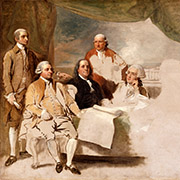
In the spring of 1760, the Chevalier de Lévis, determined to reclaim French control over Quebec, led his regrouped forces from Montreal in a last-ditch attempt to retake the city. His opponent, British commander James Murray, had been left in charge of Quebec following General Wolfe’s death during the Battle of the Plains of Abraham in 1759. The two forces met in a bloody confrontation at the Battle of Sainte-Foy on April 28, 1760. In contrast to the British victory the previous year, this time the French emerged victorious, inflicting heavy casualties on the British and forcing them to retreat back into the walled fortress of Quebec City. Lévis believed he had turned the tide, and with the British trapped within the city's walls, he awaited reinforcements from France to deliver a decisive blow.
However, the victory at Sainte-Foy would be short-lived. On May 9, 1760, the British fleet appeared in the St. Lawrence River, bringing fresh troops and supplies to the besieged garrison in Quebec. Lévis’s hopes for French reinforcements were dashed—no help was coming from France, as the nation had shifted its focus to the European front of the Seven Years’ War and could no longer support its North American colony. With the arrival of British reinforcements, the strategic situation for the French in Canada rapidly deteriorated. The British forces stationed in Quebec and those advancing from Lake Champlain coordinated their movements toward Montreal, the last French stronghold in New France. By September 1760, British General Jeffrey Amherst had surrounded Montreal, and the French, realizing their situation was hopeless, capitulated. Amherst accepted the surrender of all French territories in North America, bringing an end to 150 years of French colonial history in what is now Canada.
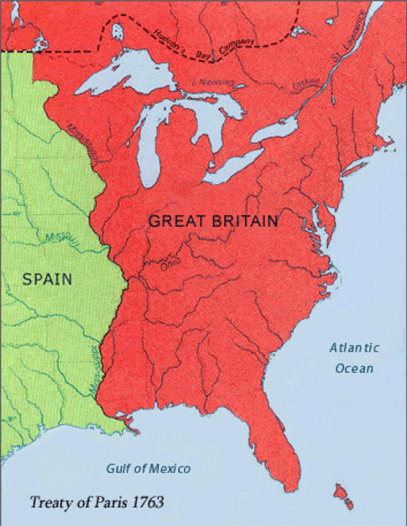
The loss of New France was cemented by the Treaty of Paris in 1763, which concluded the Seven Years’ War, a global conflict that had reshaped empires across Europe and the Americas. The treaty was a formal acknowledgment of France’s defeat, and it came with significant consequences for North America. France ceded all of its North American territories to Britain, with the exception of the small islands of Saint Pierre and Miquelon off the coast of Newfoundland, which France retained for fishing rights. The treaty allowed the French inhabitants of Canada to keep their Catholic religion, language, and civil law—a provision that would have lasting cultural implications for the future of Quebec. However, politically, New France was no more. British control of Canada was now solid, and the dream of a vast French empire in North America had ended.
The British victory, however, did not bring lasting peace in the colonies. With the French threat removed, British colonists in North America, particularly those in the Thirteen Colonies, saw fewer reasons to remain loyal to the Crown. The British government, eager to manage its enlarged empire and pay off the debts accumulated during the war, began to impose new taxes and restrictions on its colonies, including the Proclamation Line of 1763, which prohibited colonists from settling west of the Appalachian Mountains. The proclamation was intended to prevent conflicts with Indigenous nations, who had allied with the French and now found themselves without a powerful European protector. However, for the colonists, this restriction was seen as an infringement on their rights, particularly since the removal of the French had opened vast new lands for settlement. The resentment over British taxation, trade restrictions, and the limitations on westward expansion would soon sow the seeds of rebellion.
The American Revolution, which erupted in 1775, was in many ways a direct consequence of the shifting power dynamics in North America after the Seven Years’ War. With the French eliminated as a rival, British colonists no longer needed protection from the Crown and began to resist British authority more aggressively. The war for American independence would dramatically alter the political landscape of North America. For Canada, the revolution posed new challenges, as waves of Loyalists—American colonists who remained loyal to Britain—fled north to escape persecution and settled in what would become Upper Canada (modern-day Ontario) and the Maritime provinces. This influx of Loyalists further complicated the relationship between the French inhabitants of Quebec and the newly arrived English-speaking settlers, setting the stage for centuries of tension between the two linguistic and cultural groups.
The fall of New France also laid the groundwork for the future development of Canadian identity. The preservation of French culture, language, and religion in Quebec under British rule was a unique arrangement that would shape the province’s identity for centuries. The legacy of the Seven Years’ War and the Treaty of Paris reverberates in modern Canada, where the coexistence of French and English cultures remains a central feature of the nation. Additionally, the political and territorial realignments that followed the war set the stage for the eventual creation of the Canadian Confederation in 1867, as Britain sought to strengthen its remaining North American colonies against both external threats and internal divisions.
In summary, the events of 1760 and the subsequent Treaty of Paris in 1763 marked the end of French colonial ambitions in North America and the beginning of British dominance. Yet, the victory would not ensure long-term stability for the British Empire. The removal of the French threat opened the door to the American Revolution, which in turn influenced the future development of Canada. The cultural and political legacy of this era continues to shape Canada’s identity, highlighting the enduring impact of the Seven Years’ War on the nation's history.
Cite Article : www.canadahistory.com/sections/documents