CANADA HISTORY - Elections
The 2021 Federal Election in Canada
The 2021 federal election, held on September 20, 2021, was the culmination of a turbulent political period shaped by the global COVID-19 pandemic. Prime Minister Justin Trudeau called the snap election hoping to convert his minority Liberal government into a majority. However, the result was largely a return to the status quo, with the Liberal Party maintaining a minority government. The election saw Erin O’Toole’s Conservative Party continue as the official opposition, while the New Democratic Party (NDP), under Jagmeet Singh, held steady. Yves-François Blanchet’s Bloc Québécois and Elizabeth May’s Green Party played minor but notable roles, while the People’s Party of Canada (PPC), led by Maxime Bernier, garnered increased attention but failed to win any seats.
Political Situation Before the Election
Justin Trudeau’s Liberal Party had governed with a minority since the 2019 election. Trudeau’s government, while stable, relied on opposition support to pass legislation. Trudeau’s first term from 2015 to 2019 had been marked by a mix of progressive reforms and controversies, including the SNC-Lavalin affair and his handling of Indigenous issues. After securing a minority government in 2019, Trudeau faced new challenges, especially with the onset of the COVID-19 pandemic in early 2020.
COVID-19 Pandemic: The pandemic dominated Trudeau’s second term, requiring unprecedented public health and economic measures, including lockdowns, social distancing, and the rollout of vaccines. His government’s response to the pandemic was generally viewed positively in the early stages, with aggressive support for Canadians through programs such as the Canada Emergency Response Benefit (CERB) and the Canada Emergency Wage Subsidy (CEWS). However, by mid-2021, there was growing frustration over vaccination efforts, delays in vaccine delivery, and the government’s management of the economic recovery.
Trudeau’s Gamble: By the summer of 2021, with most Canadians vaccinated and the worst of the pandemic seemingly behind, Trudeau called a snap election, hoping to capitalize on the recovery momentum and secure a majority government. His critics accused him of calling an unnecessary election during a pandemic, labeling it a self-serving political maneuver. Despite strong public approval in early 2021, Trudeau faced the challenge of justifying the election amid growing voter fatigue.
Conservative Opposition: The Conservative Party, under Erin O’Toole, had been preparing for an election since O’Toole won the party leadership in 2020. O’Toole sought to broaden the Conservatives’ appeal by moving the party toward the political center, a departure from the harder right positions of his predecessor, Andrew Scheer. O’Toole promised to balance fiscal conservatism with socially progressive policies, such as support for LGBTQ+ rights and environmental reforms, though his party’s traditional base remained skeptical.
NDP Challenges: The NDP, under Jagmeet Singh, remained the third-largest party in the House of Commons. Singh had positioned the NDP as a progressive alternative to the Liberals, advocating for expanded social programs such as universal pharmacare, climate action, and housing reforms. However, the NDP faced challenges in gaining ground, particularly in urban ridings where the Liberals dominated, and in Quebec, where the Bloc Québécois had a strong presence.
Bloc Québécois and Quebec’s Role: The Bloc Québécois, led by Yves-François Blanchet, continued to focus on defending Quebec’s interests within the federal system, opposing federal policies on energy and Indigenous rights that they believed did not align with Quebec’s values. Blanchet’s Bloc was poised to maintain or improve its position in Quebec, where nationalist sentiment remained strong, though sovereignty was less of an issue than in previous decades.
Green Party Infighting: The Green Party, under Annamie Paul, faced a tumultuous period leading up to the election. Paul, who became leader in 2020, struggled with internal divisions within the party, especially regarding the Israeli-Palestinian conflict, which had led to high-profile resignations and tensions between Paul and party leadership. These internal conflicts overshadowed the Green Party’s message on climate change, which had been central to their electoral strategy.
People’s Party of Canada (PPC): The PPC, led by Maxime Bernier, gained attention during the election for its vocal opposition to COVID-19 lockdowns, vaccine mandates, and restrictions. Bernier’s populist and libertarian messaging, which resonated with a segment of voters frustrated by government pandemic measures, led to a surge in PPC support, though the party remained a fringe movement.
Party Leaders
Justin Trudeau (Liberal Party): Trudeau, seeking his third term as Prime Minister, campaigned on a platform of continued progressive reforms, including expanding healthcare access, affordable childcare, and climate action. However, Trudeau also faced accusations of arrogance for calling the election during a pandemic, and his image had been tarnished by previous controversies, such as the SNC-Lavalin affair and questions about Indigenous reconciliation.
Erin O’Toole (Conservative Party): O’Toole’s campaign focused on economic recovery, proposing a “Canada Recovery Plan” that included job creation, tax cuts, and infrastructure investments. O’Toole also emphasized the need to move beyond the pandemic and restore a sense of normalcy. His centrist positioning and moderate tone were designed to appeal to swing voters, though he struggled with internal divisions within his party, particularly over vaccine mandates and climate policy.
Jagmeet Singh (NDP): Singh campaigned on a progressive platform that included universal pharmacare, housing affordability, and aggressive climate action. Singh’s personal popularity, especially among young voters, was high, but translating that into electoral success remained a challenge. His focus on social justice issues, such as systemic racism and income inequality, resonated with left-leaning voters, though the NDP faced stiff competition from the Liberals in urban ridings.
Yves-François Blanchet (Bloc Québécois): Blanchet positioned the Bloc as the defender of Quebec’s interests, particularly in areas like environmental protection, healthcare, and cultural sovereignty. He criticized federal intrusion into provincial matters and argued that Quebec needed strong representation in Ottawa to protect its distinct identity and values.
Annamie Paul (Green Party): Paul’s leadership of the Greens was marred by internal party divisions and a lack of cohesion on key policy issues. While Paul’s platform focused on climate action and social justice, the internal conflicts within the party severely hampered its ability to present a unified message during the campaign.
Maxime Bernier (People’s Party of Canada): Bernier’s PPC ran on a populist platform, opposing COVID-19 vaccine mandates, lockdowns, and what Bernier described as government overreach. His message resonated with a segment of voters who were disillusioned with the mainstream parties and frustrated by pandemic restrictions, though the PPC remained a fringe party.
Issues of the Election
The 2021 federal election was shaped by several key issues, many of which were a direct result of the ongoing pandemic and its social and economic impact:
COVID-19 Response and Vaccination: The pandemic dominated the election, particularly the government’s handling of the vaccine rollout, public health measures, and economic recovery. Trudeau’s Liberals defended their pandemic response, including lockdowns and support programs like CERB, while promising to continue vaccine mandates for federal workers and stricter public health guidelines. O’Toole’s Conservatives criticized Trudeau for calling an election during the pandemic and promised to end lockdowns and vaccine mandates, instead focusing on personal responsibility. The NDP supported strong public health measures but argued that the Liberals had failed to adequately support working Canadians during the pandemic.
Affordability and Economic Recovery: Affordability, particularly in housing, was a top concern for voters. Trudeau promised to build more affordable housing and expand childcare programs, while O’Toole focused on job creation and tax cuts to stimulate economic recovery. Singh’s NDP focused on housing affordability and introduced a wealth tax targeting the richest Canadians to fund social programs. Economic recovery in the wake of the pandemic was central to all parties, though their approaches varied widely.
Climate Change: Climate action remained a critical issue, especially after a summer of record-breaking heatwaves and wildfires in Western Canada. Trudeau’s Liberals emphasized their carbon pricing plan and promised to increase investments in renewable energy. The NDP pushed for more aggressive climate action, including ending subsidies to the fossil fuel industry. O’Toole promised to repeal the carbon tax but introduced a plan to replace it with a consumer-driven carbon savings account, a move aimed at balancing environmental concerns with economic growth. The Greens, despite internal divisions, continued to campaign on climate action as their primary issue.
Healthcare and Long-Term Care: The pandemic highlighted the weaknesses in Canada’s healthcare and long-term care systems. The Liberals promised to increase funding for healthcare, while the NDP advocated for expanding Medicare to include universal pharmacare. O’Toole’s Conservatives promised to boost healthcare transfers to the provinces while maintaining a focus on economic recovery. The state of long-term care facilities, many of which were hit hard during the pandemic, was also a significant issue, with all parties pledging reforms.
Indigenous Reconciliation: The discovery of unmarked graves at former residential school sites across Canada in mid-2021 reignited calls for reconciliation and justice for Indigenous peoples. Trudeau faced criticism for failing to meet many of his promises on Indigenous rights and reconciliation. The NDP and Greens called for stronger action on Indigenous issues, while the Bloc emphasized the importance of provincial jurisdiction in these matters.
Campaign Strategies
Liberal Party: Trudeau’s campaign focused on securing a majority government to continue the Liberal Party’s progressive agenda. The Liberals emphasized their pandemic response and pitched themselves as the party of stability and recovery. Trudeau sought to contrast his leadership with O’Toole’s Conservatives, warning that a Conservative government would roll back progress on climate action and social justice. However, the decision to call an election during a pandemic backfired, with many voters questioning the need for the election and accusing Trudeau of putting political ambition ahead of public safety.
Conservative Party: O’Toole’s strategy was to reposition the Conservatives as a more centrist, inclusive party, moving away from the socially conservative policies of past leaders. His campaign focused on the “Canada Recovery Plan,” which promised jobs, economic growth, and tax relief. O’Toole’s attempt to appeal to a broader electorate by moderating his stance on key issues like climate change and LGBTQ+ rights was met with mixed reactions, particularly from the party’s traditional base. While O’Toole gained support in certain suburban ridings, he struggled to unite the party’s factions, and internal divisions over vaccine mandates and climate policy were a constant challenge.
New Democratic Party: Singh’s NDP ran a progressive campaign, focusing on healthcare, housing affordability, and social justice. Singh’s personal popularity, especially among younger voters, was a key asset, and his debate performances helped boost the NDP’s visibility. However, the party faced the challenge of translating Singh’s popularity into votes, particularly in ridings where the Liberals remained dominant. The NDP’s strategy of positioning themselves as a progressive alternative to the Liberals resonated with some voters, but the party struggled to gain significant traction in key regions.
Bloc Québécois: Blanchet’s Bloc Québécois focused on defending Quebec’s interests, particularly on issues like healthcare, culture, and the environment. Blanchet effectively framed the Bloc as the best choice for Quebecers to protect their unique identity and push back against federal overreach. The Bloc’s message resonated strongly in Quebec, where voters were increasingly concerned about the federal government’s influence on provincial matters.
Green Party: The Green Party’s campaign was severely hampered by internal divisions and a lack of resources. Annamie Paul’s leadership was constantly overshadowed by infighting, and the party struggled to present a unified message on climate change, which had traditionally been its central issue. Despite these challenges, the Greens attempted to position themselves as the most credible party on environmental issues, though their influence remained limited.
People’s Party of Canada: Bernier’s PPC focused on anti-lockdown, anti-vaccine, and anti-government rhetoric, which resonated with a segment of voters frustrated by pandemic restrictions. The PPC’s populist messaging attracted attention, particularly in Western Canada, but the party’s extreme positions on immigration and multiculturalism alienated many voters. While the PPC gained in popular support, Bernier’s confrontational style and far-right positions prevented the party from breaking into the political mainstream.
Election Day and Results
The 2021 federal election resulted in little change from the 2019 election, with the Liberal Party once again winning a minority government:
Liberal Party: The Liberals won 160 seats, up slightly from 157 in 2019, but still short of the 170 needed for a majority. Trudeau’s gamble to secure a majority backfired, as voters remained skeptical of the need for the election. While the Liberals maintained their dominance in Ontario and Quebec, they faced significant opposition in Western Canada, where the Conservatives won the vast majority of seats.
Conservative Party: The Conservatives won 119 seats, down slightly from 121 in 2019. While the party won the popular vote with 33.7% of the vote, O’Toole’s efforts to broaden the party’s appeal were only partially successful. The Conservatives remained strong in Western Canada and parts of rural Ontario, but they failed to make significant gains in key urban and suburban ridings.
New Democratic Party: The NDP won 25 seats, a modest increase from 24 in 2019. Singh’s personal popularity and progressive platform helped the party retain its core support, but the NDP struggled to break through in key ridings. The party’s gains were limited by the dominance of the Liberals in urban centers and the Bloc in Quebec.
Bloc Québécois: The Bloc won 32 seats, maintaining its position as the third-largest party in the House of Commons. Blanchet’s focus on defending Quebec’s interests resonated with voters, allowing the Bloc to maintain its stronghold in Quebec. While the Bloc did not make significant gains, it remained a major player in Quebec politics.
Green Party: The Greens won 2 seats, down from 3 in 2019. The party’s internal divisions and lack of resources severely hampered its campaign, and Annamie Paul lost her own race in Toronto Centre. The Greens’ poor performance led to questions about the future of the party and Paul’s leadership.
People’s Party of Canada: The PPC won 0 seats, but its share of the popular vote increased to 5%, up from 1.6% in 2019. While Bernier failed to win his own seat, the PPC’s populist message resonated with a segment of voters frustrated by pandemic restrictions. However, the party remained a fringe movement, with limited influence in the broader political landscape.
Aftermath
The 2021 federal election resulted in a largely unchanged political landscape, with Justin Trudeau’s Liberal Party continuing to govern with a minority. While the election did not produce the majority government Trudeau had hoped for, it solidified his leadership for another term. However, Trudeau would have to navigate a fragmented Parliament, relying on opposition parties like the NDP or Bloc Québécois to pass legislation.
For Erin O’Toole and the Conservatives, the election was a disappointment. Despite winning the popular vote, the Conservatives failed to make significant gains, particularly in key urban and suburban ridings. O’Toole faced internal pressure from the party’s right-wing factions, and his leadership was called into question in the aftermath of the election.
Jagmeet Singh and the NDP remained steady, with a modest increase in seats. Singh’s leadership and personal popularity were viewed positively, but the party faced challenges in breaking through in key regions dominated by the Liberals and Bloc Québécois.
The Bloc Québécois maintained its position as a dominant force in Quebec, while the Green Party faced a leadership crisis following its poor performance. Annamie Paul resigned as Green Party leader shortly after the election, leaving the party in a state of uncertainty.
The PPC, despite its increased share of the popular vote, remained on the fringes of Canadian politics, with no seats in Parliament. Maxime Bernier’s leadership continued to attract controversy, and the PPC’s future as a viable political force remained uncertain.
Overall, the 2021 election reflected the deep divisions within Canadian society, particularly over issues like the pandemic, climate change, and economic recovery. Trudeau’s government would face significant challenges in governing a polarized and fragmented Parliament, with the need for compromise and collaboration becoming more important than ever.
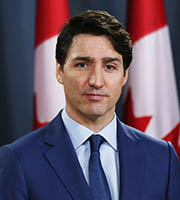
Justin Trudeau - Liberal

Andrew Sheer - Conservative

Yves-François Blanchet - Bloc

Jagmeet Singh - NDP

Elizabeth May - Green

Maxime Bernier- People's Party
| Election Party |
Elected Members | # of Candidates | % of Popular Vote | % of Seats |
|---|---|---|---|---|
| 2019 (Oct 21) - Turnout: 65.95 % | ||||
| Liberal | 157 | 338 | 33.07 % | 78.5 % |
| Conservative | 121 | 338 | 34.41 % | 18.5 % |
| Bloc | 32 | 70 | 7.69% | 3.0 % |
| NDP | 24 | 10 | 15.93 % | 0.0 % |
| Green | 3 | 51 | 6.5% | 0.0 % % |
| People's Party | 0 | 10 | 1.64 % | 0.0 % |
| Total | 338 | 831 | ||
| Government--184, Opposition--154, Majority--164 | ||||
Cite Article : Reference: www.canadahistory.com/sections/documents/documents.html
Source: NA